Addiction: Definition, Types, How It Works, Effectiveness
Reading time: 15 minutes
Published on Jan 01, 2024 by Author NameAddiction Intervention for Alcohol and Drug Abuse
Is a loved one struggling with addiction? Have you tried everything to help them, but nothing seems to work? Addiction intervention might be the key.
This powerful strategy involves a carefully planned confrontation with the individual, supported by family, friends, or professionals. By confronting the reality of their addiction, individuals can be motivated to seek help and embark on a path to recovery.
But how does it work, and is it effective? Let’s dive into the world of intervention for alcohol or drug addiction and explore its potential to change lives.
What Is Addiction Intervention?
Addiction intervention is a structured process within the category of behavioral health strategies designed to help individuals with substance abuse or compulsive behaviors recognize their problem and agree to seek treatment.
This process involves the identification and addressing of the misuse of psychoactive substances, including alcohol, prescription drugs, and street drugs such as cannabis, cocaine, heroin, and amphetamines. The ultimate goal is to initiate medical and psychotherapeutic treatment and support recovery efforts with the help of professionals who guide individuals toward acknowledging their addiction and seeking appropriate help.
Researchers like Dr. John F. Kelly, a prominent figure in addiction treatment research, emphasize the critical role of structured interventions in achieving successful outcomes for individuals struggling with addiction. According to a study by Kelly JF et al. (2023), “Cognitive-Behavioral Approaches for the Treatment of Substance Use Disorders and Co-occurring Mental Health Conditions,” effective addiction intervention significantly improves the likelihood of entering and sustaining treatment.
The National Institute on Drug Abuse (NIDA) (2019) highlights that when interventions are conducted properly, they lead to increased engagement in treatment programs and a higher rate of recovery. Furthermore, the process of medical and psychotherapeutic treatment that follows the intervention plays a crucial role in supporting long-term recovery efforts.
The importance of addiction intervention lies in its ability to provide a pivotal moment for individuals to confront their addiction with support from professionals and loved ones. According to the Substance Abuse and Mental Health Services Administration (SAMHSA) (2023), in 2022, an estimated 54.6 million people aged 12 and older needed treatment for a substance use disorder. However, only 26% of those received any help. SAMHSA further reports that around 4.3 million Americans aged 12 or older (4.6%) received treatment for alcohol use disorder in 2022.
What Are the Types of Addiction Intervention?
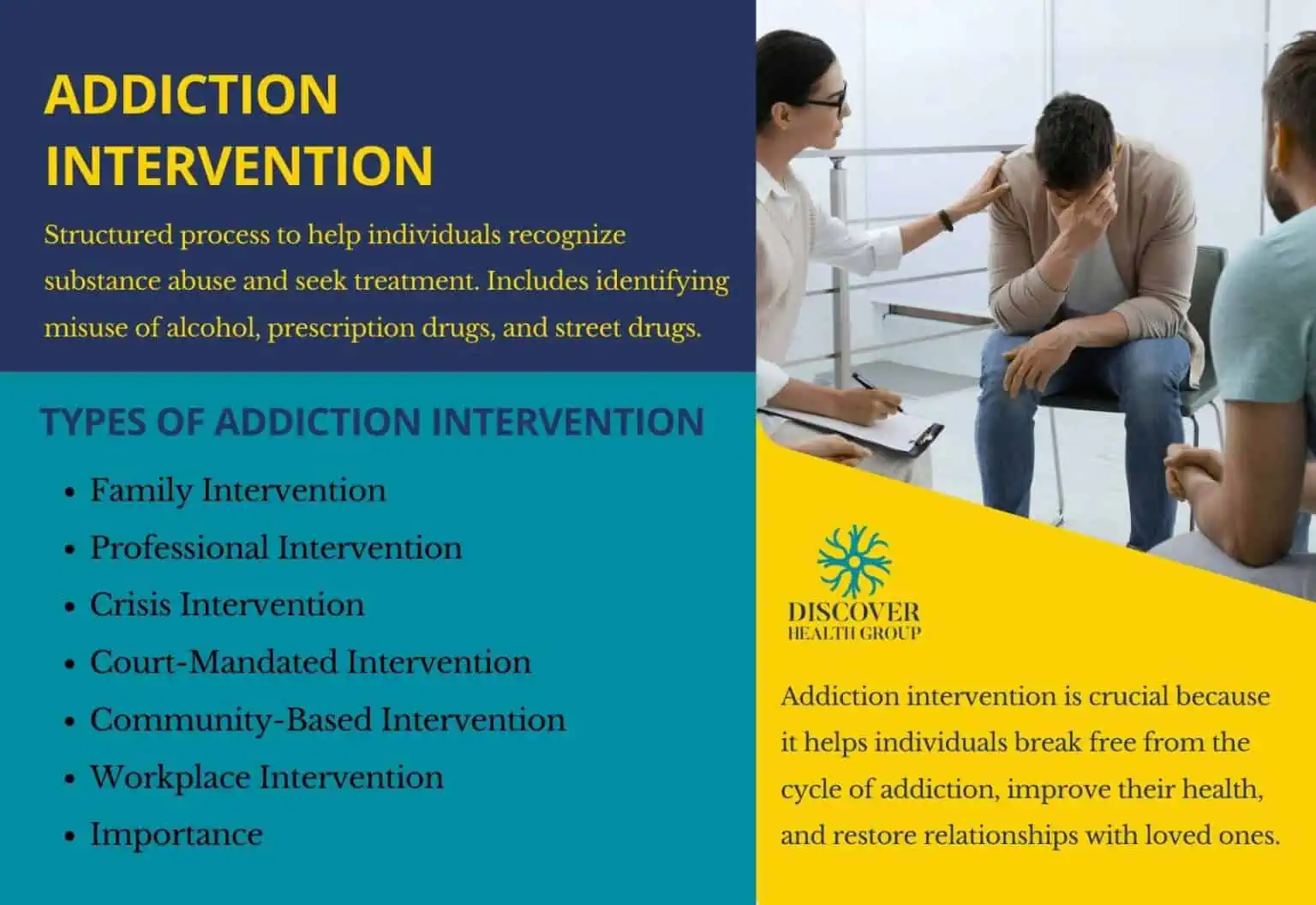
The types of addiction intervention include family-based interventions, professionally guided interventions, and legally mandated interventions, all designed to address substance use disorders through various methods and settings.
1. Family Intervention
Family intervention involves engaging family members in addressing an individual’s substance use disorder. Structured meetings encourage the individual to seek treatment. Family interventions leverage the support and influence of loved ones, creating a compelling and supportive environment for the individual to consider change.
2. Professional Intervention
Professional intervention is conducted by trained addiction specialists who guide the intervention process. These professionals develop a tailored intervention plan, ensuring that the individual receives appropriate care. Professional interventions improve treatment engagement and outcomes.
3. Crisis Intervention
Crisis intervention is used in emergencies where immediate action is required to address severe substance use issues. This type of intervention provides rapid support and stabilization, involving emergency services or specialized crisis teams. It addresses urgent needs and facilitates immediate access to treatment.
4. Court-Mandated Intervention
Court-mandated intervention involves legal orders requiring individuals to undergo treatment as part of a legal judgment. This type integrates legal consequences with treatment, motivating individuals to engage in recovery efforts due to legal pressures.
5. Community-Based Intervention
Community-based intervention involves local organizations, support groups, and community resources. This approach creates a supportive environment that enhances access to resources and promotes recovery within the community.
6. Workplace Intervention
Workplace intervention addresses substance use disorders within employment settings. It involves programs and policies that support employees in seeking help for addiction issues, maintaining job performance, and providing support for recovery.
How Does Addiction Intervention Work?
Addiction intervention involves a collaborative effort where family members, friends, and sometimes professionals come together to address an individual’s substance use issues. This process is designed to confront the person’s destructive behaviors in a supportive and structured manner, encouraging them to seek treatment.
Interventions are usually held in a controlled, private setting, which helps manage the emotional intensity and fosters open communication. The Medical News Today (2022) highlights the importance of privacy in these situations.
If an individual refuses treatment, the next steps involve setting clear consequences, such as changes in family dynamics, financial support, or living arrangements. The goal is to create urgency for the person to accept help.
After the intervention, the focus shifts to implementing the agreed-upon treatment plan, offering continued support from family and professionals. The process addresses the underlying issues related to addiction and establishes a framework for long-term recovery.
Addiction intervention approaches also vary based on the age group of the individual. Tailoring interventions to different age groups ensures that the approach is relevant and effective.
References:
- Kelly JF, Fallah-Sohy N et al. (2023). Cognitive-Behavioral Approaches for the Treatment of Substance Use Disorders and Co-occurring Mental Health Conditions.
- National Institute on Drug Abuse (NIDA). (2019). Treatment.
- Substance Abuse and Mental Health Services Administration (SAMHSA). (2023). National Survey on Drug Use and Health.
- Miller WR, Rollnick S. (2013). The Effectiveness and Ineffectiveness of Complex Behavioral Interventions.
- Roberts AR, et al. (2005). Adolescent Substance Abuse and Crisis Intervention.
- Dill PL, Wells-Parker E. (2006). Court-Mandated Treatment for Convicted Drinking Drivers.
- Malick R. et al. (2018). Prevention of Substance Use Disorders in the Community and Workplace.